


About ETC Africa
We believe better decisions start with better evidence.
ETC Africa works at the intersection of carbon, tourism, conservation and environmental performance. For more than two decades, we have helped organisations understand their environmental impact — and increasingly, understand what their numbers actually mean.
The work, in four steps
Carbon & environmental intelligence for African tourism.
From carbon accounting to environmental intelligence
The work has evolved.
Our foundations are in carbon footprinting and greenhouse gas accounting. After years of measuring organisations, a bigger question kept surfacing: what does the number actually mean?
A carbon footprint can tell a business how much it emits. It cannot, by itself, tell that business whether the performance is strong, weak, improving, unusual or operationally efficient.
The methodology gives us the number. Context gives it meaning.
Carbon measurement
01A defensible number, built from operational evidence.
Environmental benchmarking
02The same number, placed next to relevant peers.
Operational interpretation
03What the variance is actually telling you.
Environmental intelligence
04Information a manager can act on.
Tourism specialists
Tourism isn't just another industry to us.
ETC Africa has deep roots in African tourism, ecotourism and conservation. Meaningful environmental analysis requires understanding how tourism actually operates.
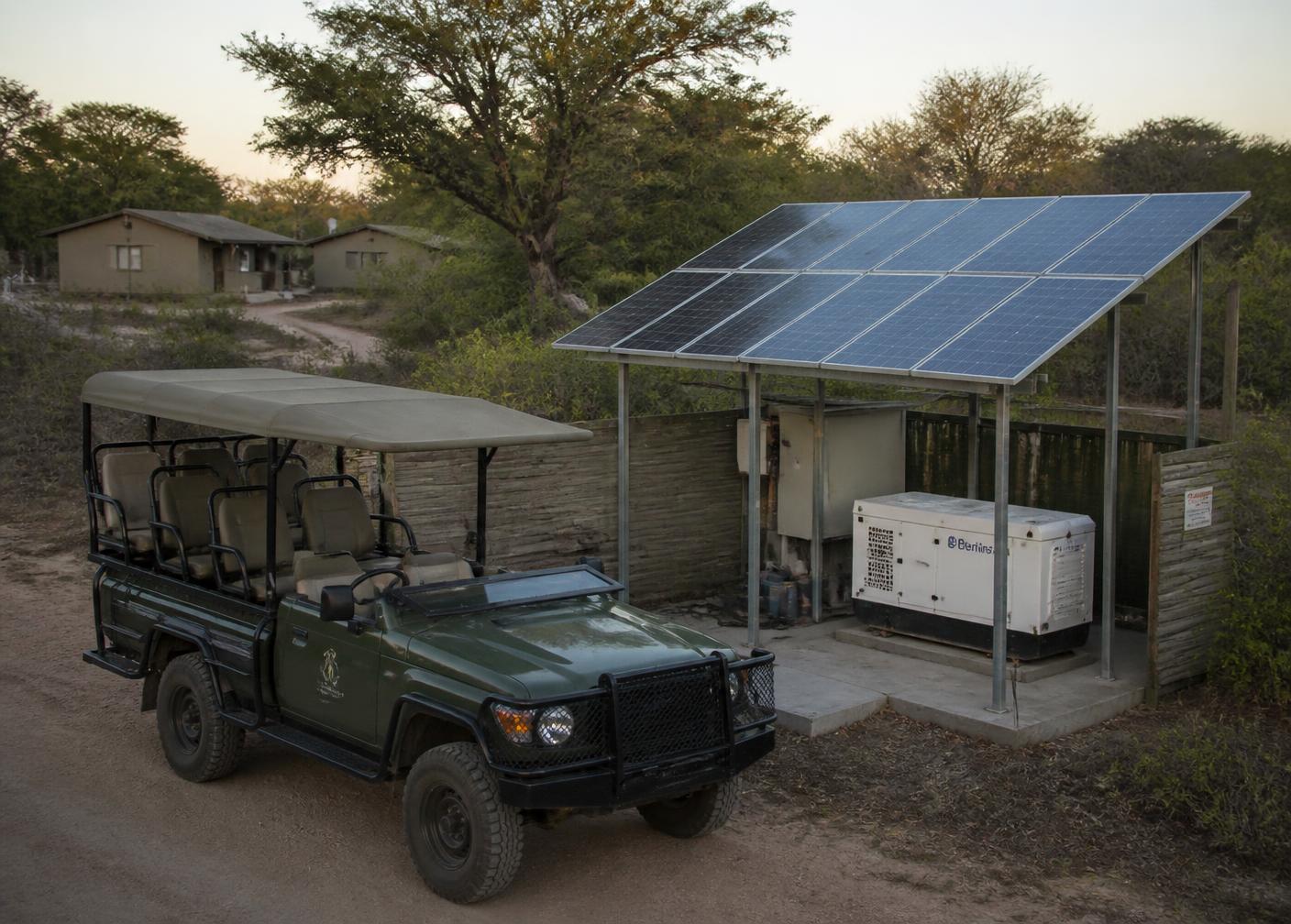
Context changes everything.
An off-grid safari lodge operating generators, solar systems, game-drive vehicles and remote supply chains should not be analysed as though it were an urban office building. That specialist understanding is central to how we build peer groups and interpret results.
See how benchmarking works
Duncan Pritchard
Founder — ETC Africa
Founder
Is that number actually good?
Duncan has spent more than 25 years across ecotourism, conservation and sustainability in Africa — from tourism development and conservation-linked tourism through to sustainability strategy and greenhouse gas accounting. He is a registered carbon auditor and has worked with everything from single lodges to multi-property portfolios.
But the interesting part was never the inventory itself. Years of calculating footprints kept raising the same question from clients: is that number actually good? Measurement establishes impact. Comparison creates context. And context turns environmental reporting into something managers can genuinely use. That shift is what ETC Africa was built around.
Principles
How we think.
Carbon keeps sustainability honest.
Sustainability is broad. Carbon gives us something measurable, comparable and independently reviewable.
Measurement tells you where you are. Benchmarking tells you what it means.
A number becomes more useful when it has context.
A variance is a question before it is a conclusion.
A dramatic improvement might represent excellent performance — or incomplete data. Investigate first.
The report isn't the outcome.
Environmental data becomes valuable when it influences management decisions.
Better evidence produces better intelligence.
Data quality is not administrative housekeeping. It determines how confidently performance can be understood.
Context matters.
Different tourism operations have different realities. Meaningful comparisons need to reflect them.
Technical foundation
No special ETC carbon mathematics.
Our carbon accounting is grounded in globally recognised greenhouse gas accounting principles, established emission factors and transparent evidence.
The intelligence we add comes from understanding tourism operations, interrogating the data and comparing performance in meaningful context — not from a proprietary formula.
The accounting methodology is established. The insight comes from what we do with it.
- 01Raw operational data
- 02Recognised methodology
- 03Carbon inventory
- 04Benchmark context
- 05Environmental intelligence
Data confidence
We would rather show uncertainty than hide it.
Real-world tourism data is rarely perfect. Invoices go missing. Fuel records disagree. Waste information can be incomplete. Operational boundaries change. We treat data quality and evidence confidence as part of the assessment rather than pretending every number carries equal certainty.
An honest estimate is more useful than false precision.
Data confidence
Illustrative values only
African experience
Built around African operating realities.
Our work spans tourism businesses in very different environments — from remote conservation landscapes to grid-connected hospitality operations. The growing dataset behind that work is helping build a clearer picture of environmental performance across African tourism.
25+ years
Tourism & sustainability experience
7
African countries
93
Tourism assessments
400,000+
Guest bed nights analysed
Independent-minded
Sustainability doesn't need more theatre.
Our role is not to make every number look good. Sometimes the useful finding is excellent performance. Sometimes it is an inefficiency, a data problem, or simply something that needs more investigation.
Good news
- Strong performance
- Credible reduction
- High data confidence
Useful news
- Unexpected variance
- Poor evidence
- Operational anomaly
Both are valuable if they lead to better decisions.
Tourism, conservation & the bigger picture
Tourism has an impact. It can also protect what matters.
Tourism creates environmental impacts that should be measured and reduced. But across Africa, tourism also supports conservation landscapes, wildlife protection, employment and rural economies.
Our philosophy is therefore not about making tourism disappear from the carbon ledger. It is about understanding and reducing environmental cost while strengthening the value tourism creates.
Explore the Eco Travel FoundationHow it fits together
Technical expertise. Independent programme framework.
ETC Africa and the Eco Travel Foundation play different but complementary roles.
ETC Africa provides the technical expertise: measuring environmental performance, assessing the evidence, calculating carbon footprints, benchmarking tourism operations and helping businesses understand what the numbers mean.
The Eco Travel Foundation provides the independent foundation-led programme framework through which participating properties can receive annual climate-performance assessment and recognition.
ETC Africa
Technical expertise & environmental intelligence
- Measurement
- Carbon accounting
- Evidence assessment
- Benchmarking
- Performance interpretation
- Technical reporting
ETC Africa works directly with tourism businesses to turn operational data into credible environmental intelligence.
Eco Travel Foundation
Programme stewardship & recognition
- Climate Performance Programme
- Participation framework
- Programme governance
- Public recognition
- Status and recognition assets
The Eco Travel Foundation stewards the Climate Performance Programme, providing the framework through which participating properties are assessed and recognised.
Optional certification pathway
In developmentHigher-assurance pathway in development
- Independent conformity review
- Separate certification decision
- Distinct certification recognition
The programme is developing an optional certification pathway for properties seeking an additional level of independent review. Certification will build on the technical assessment by adding independent conformity review and a separate authorised certification decision.
Bring us the data. We'll help make sense of it.
Whether you have years of environmental reporting or a collection of invoices, spreadsheets and operational records, the useful question is the same: what can the evidence tell us?